Open Plan Kitchen-Living-Dining
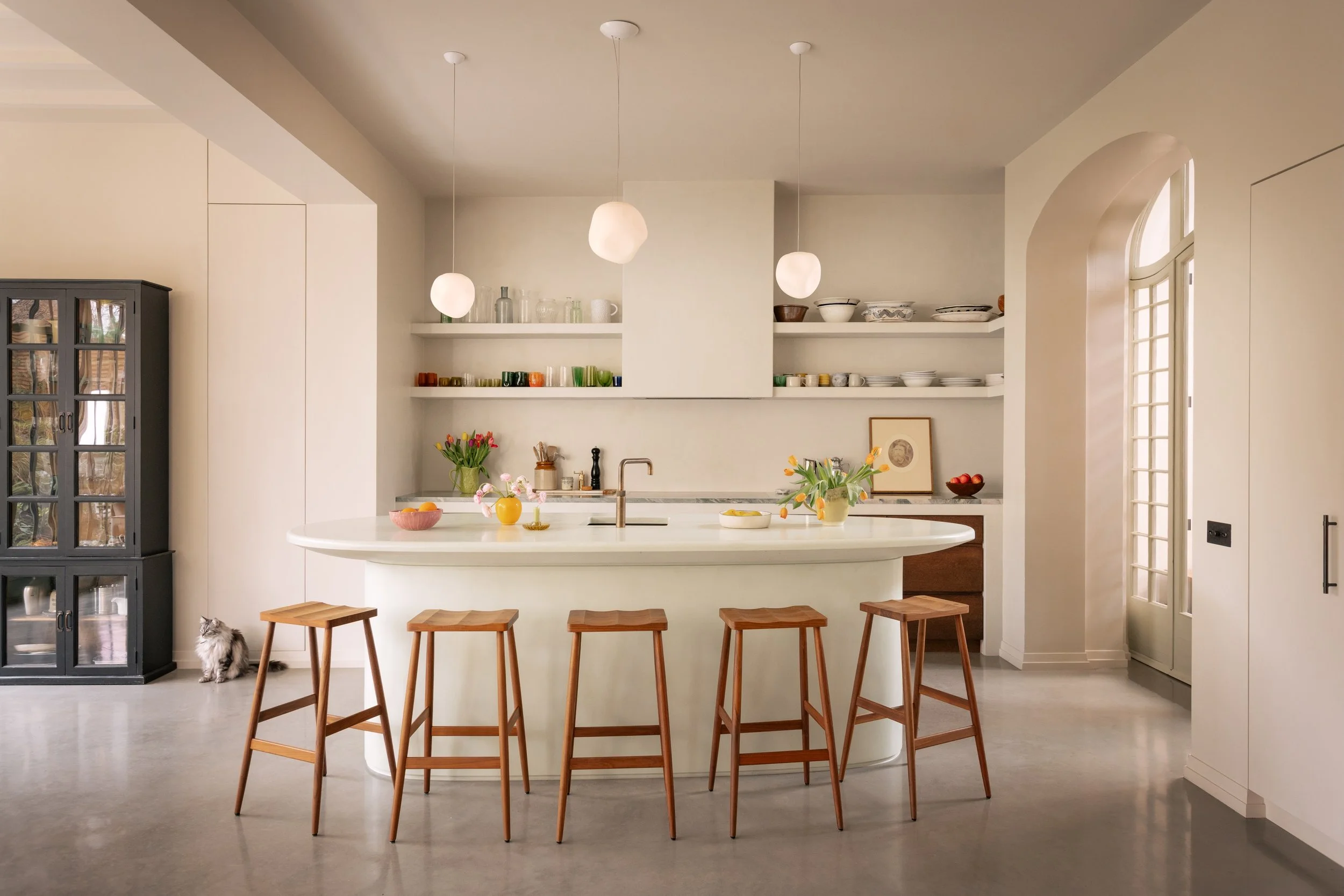
As kitchens define the heart of contemporary family homes, they are no longer separate, utilitarian zones but integral to our living, dining, socialising and working lives.
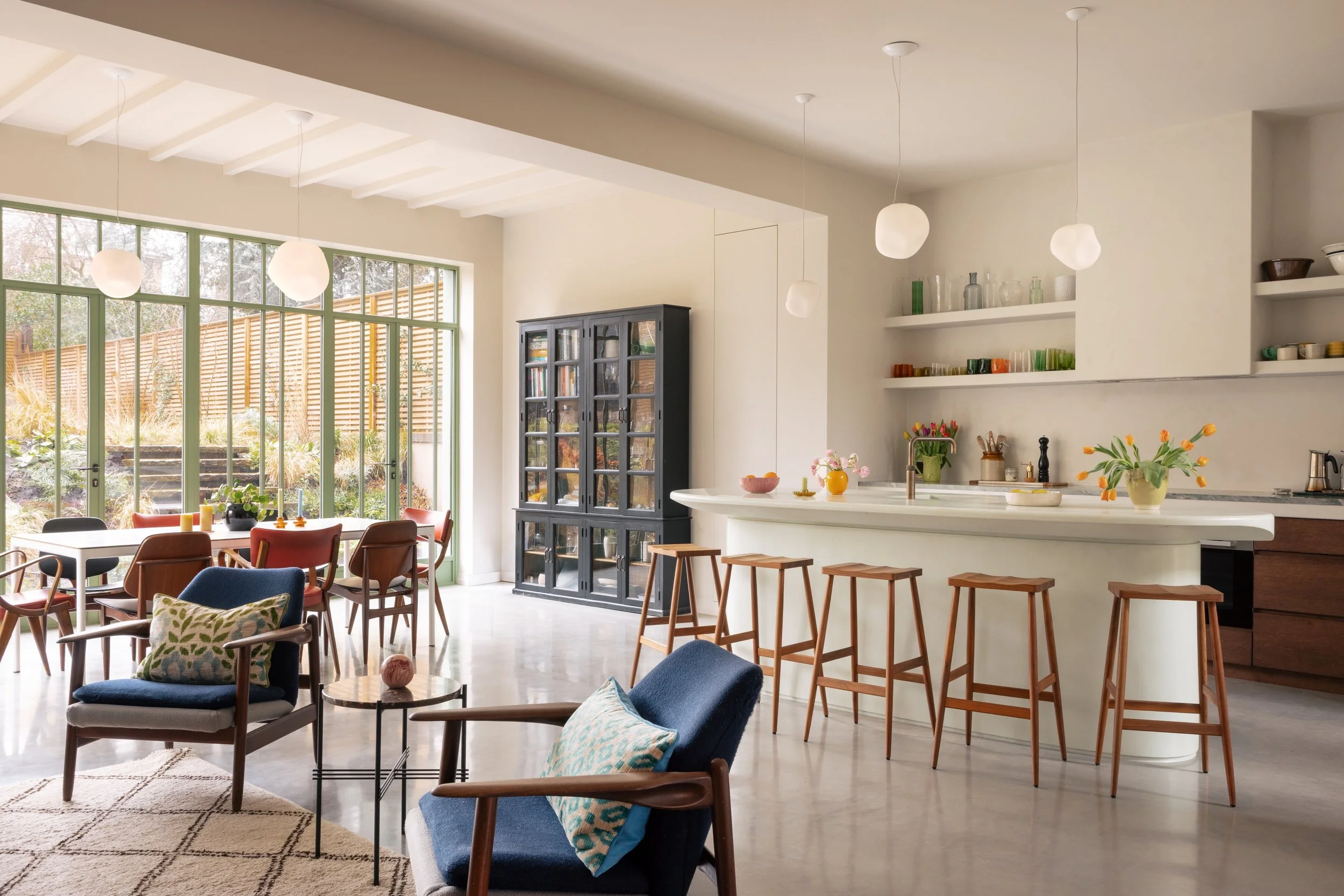
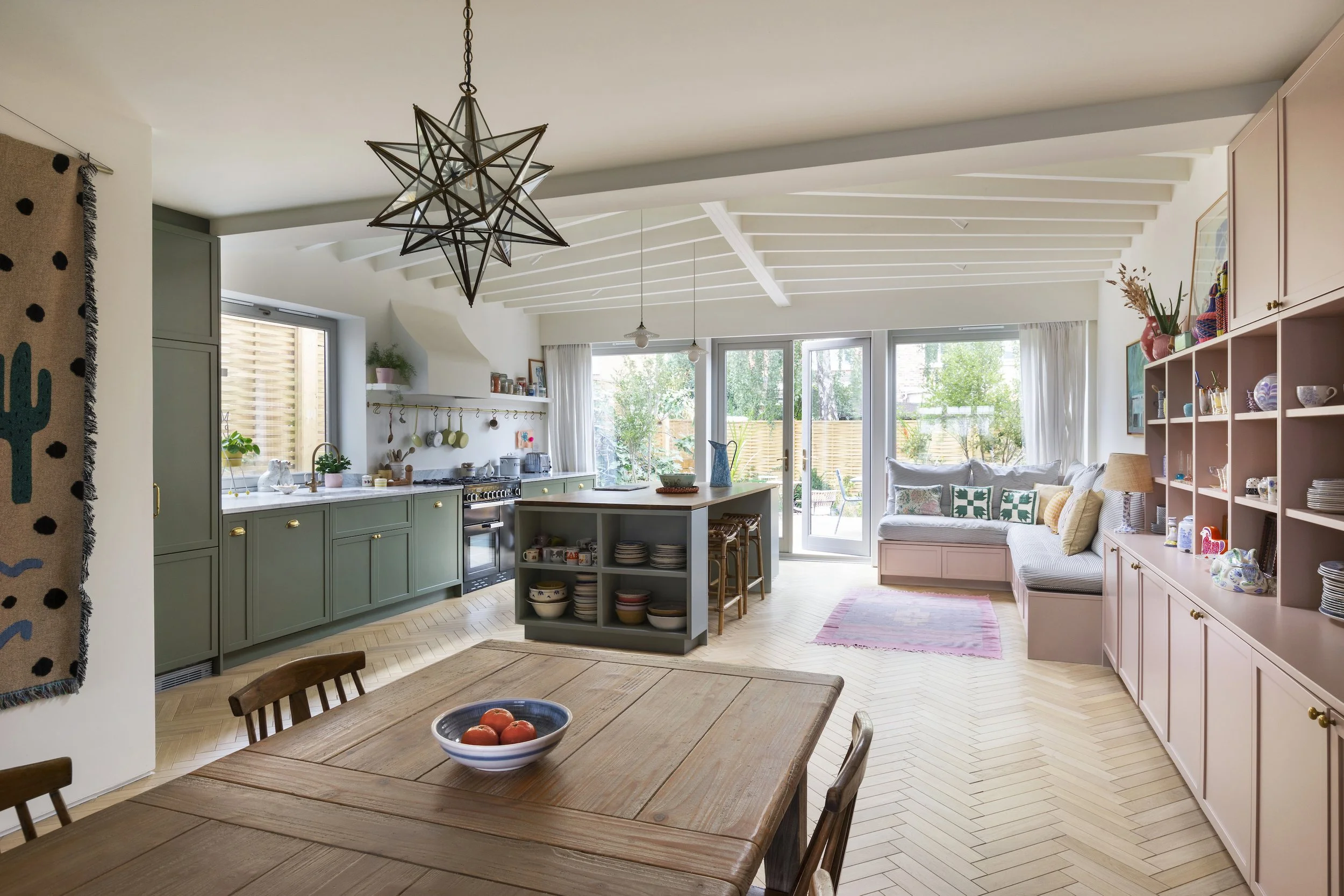
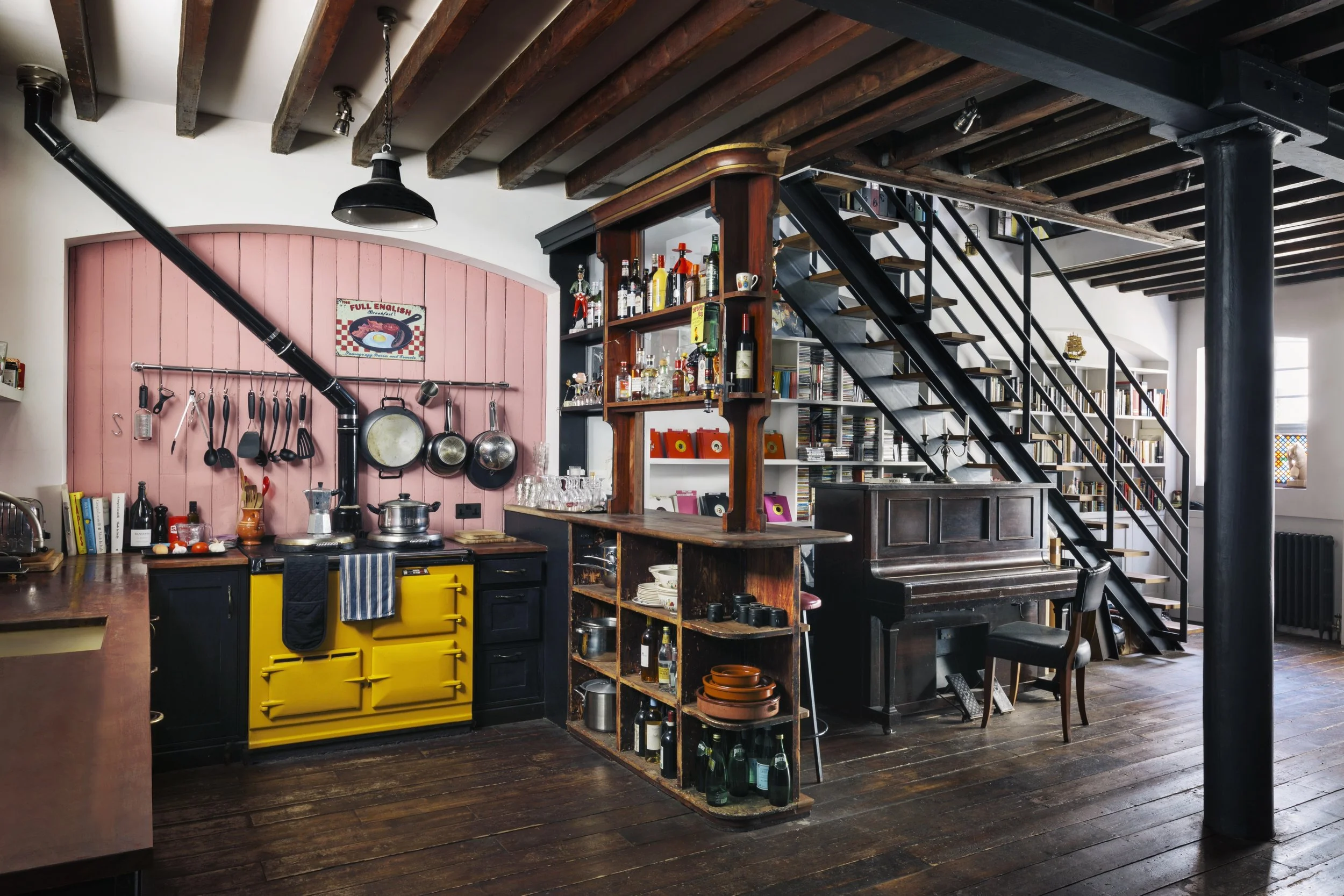
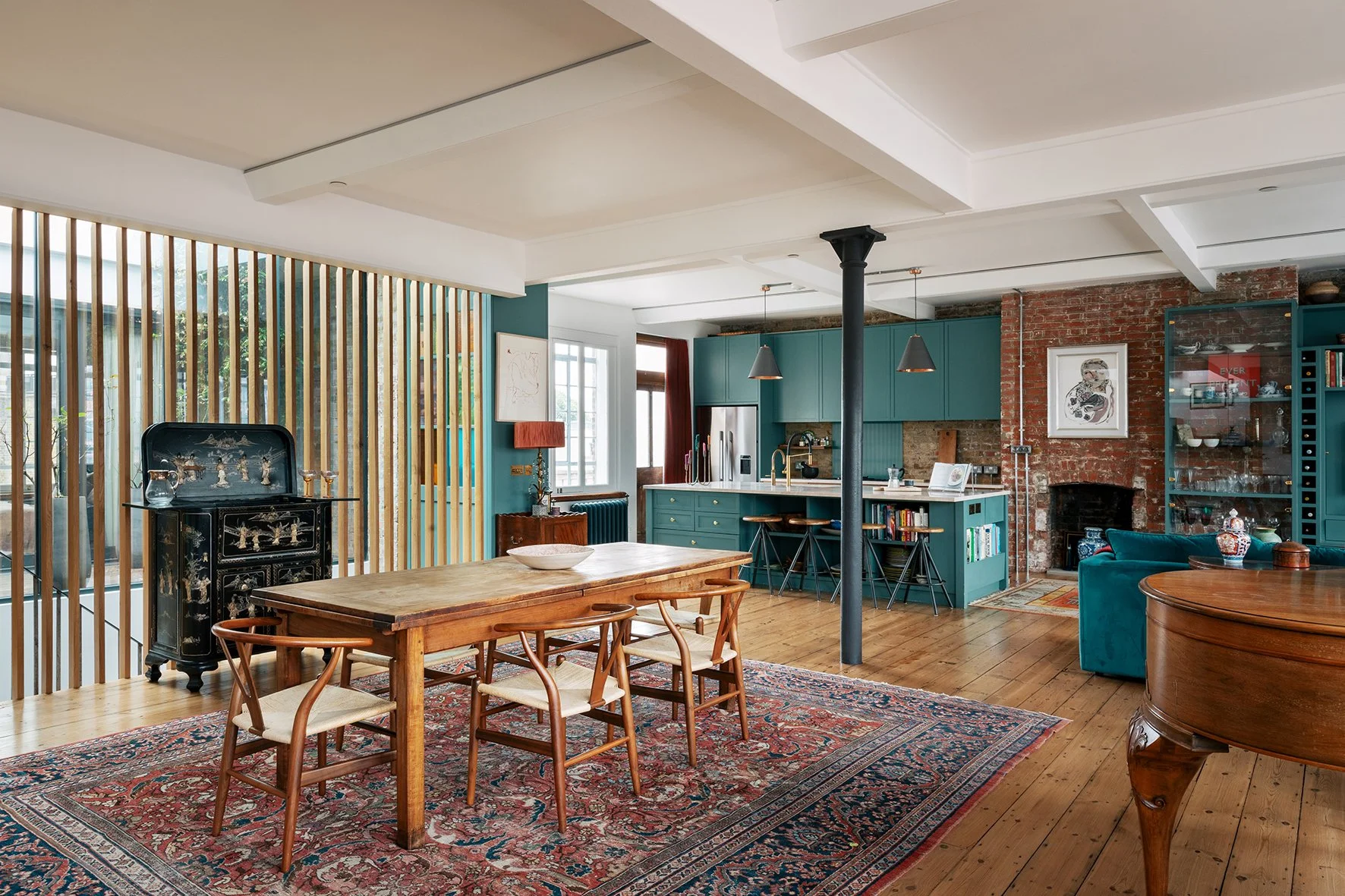
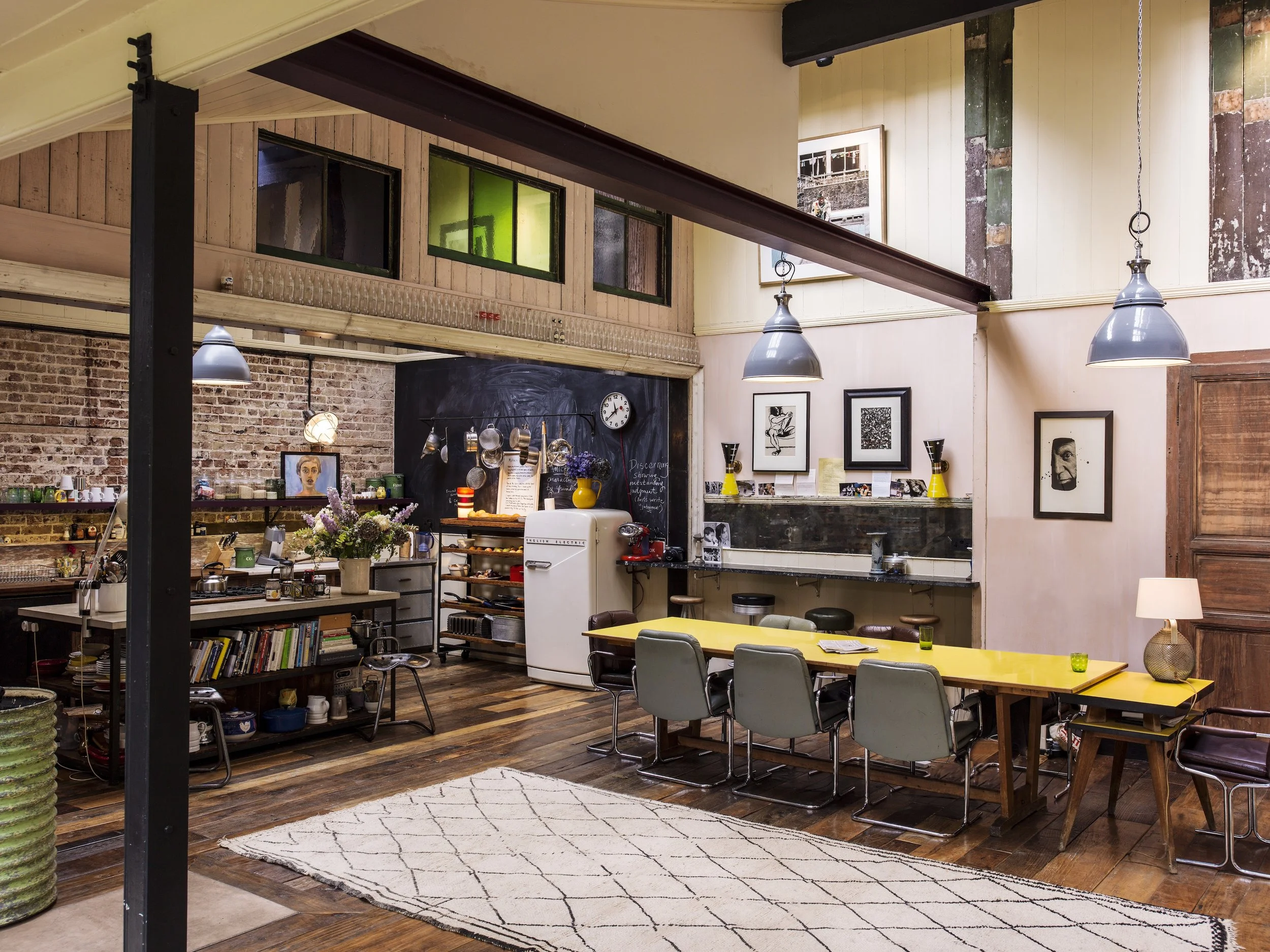
Fluted and reeded panelling, irregular tiles, lined cabinetry, oak screens, exposed brickwork and ceiling rafters are just some of the materials and surfaces we like to use. Added to this are the subtle shifts in paint sheen or even colour, the use of brass or bronze, and reclaimed materials with their patina, all acknowledging that smooth surfaces, too, can be thought of three-dimensionally. Set side-by-side, varying depths establish contrasts, relief and heightened experiences. It’s about an awareness of surfaces from smooth, modelled to textured, that guides our designs and explorations to define rooms.
Our palette usually arises responsively and organically - taking cues from the building itself as well as the likes and dislikes of our clients and the things they bring with them and aspire to achieve. Working with a full collection of parts and pieces, we like to think of this as a choreography of space where surface depth, shadow and variation are set in concert with the proportions of the space and the objects within (books, paintings, furniture). This is an approach we refer to as ‘a living architecture’ - built form as alive and living.
While open-plan living has been around for some time, the idea of shared, communal domestic space is actually much older than we may first believe. We seemed to have forgotten this, as there was a long period where the separation of the kitchen was prevalent. This arose a couple centuries ago, through increased wealth of the middle class, technology and changing social hierarchies into the 18th-19th centuries. Especially in Georgian and Victorian houses, functions became increasingly specialised. Kitchens were pushed to the back or basement, together with the housekeeper and cook, hidden from view, while dining and living rooms were made distinct and formal. There was a clear demarcation of parlour, drawing room and library from the scullery, cellars and kitchen.
We seem to think contemporary architecture came up with this idea of an open-plan kitchen, when in reality it sits at the core of our human nature, as social creatures. What we need to remember is that in pre-industrial and pre-historic homes, domestic life revolved around a single main room where cooking, eating, working and socialising all took place around the hearth - in many ways as today.
I’ve always been fascinated by the medieval ‘Halls’ of British manor and farmhouses. Shakespeare grew up with one, in a timber-framed house (Henley Street, Stratford-upon-Avon, mid-16th-C). These Halls were not grand spaces but were large enough, open, and multifunctional. This principal room of the house was the main living space where the family ate, where work took place. And, importantly for the impressionable Shakespeare, it was the noisy, social place of drama, gossip, and storytelling. While perhaps not to the same intensity, our open-plan rooms today are those same social, working hearts of our households. Rebuilding from the past is a going back to the future.