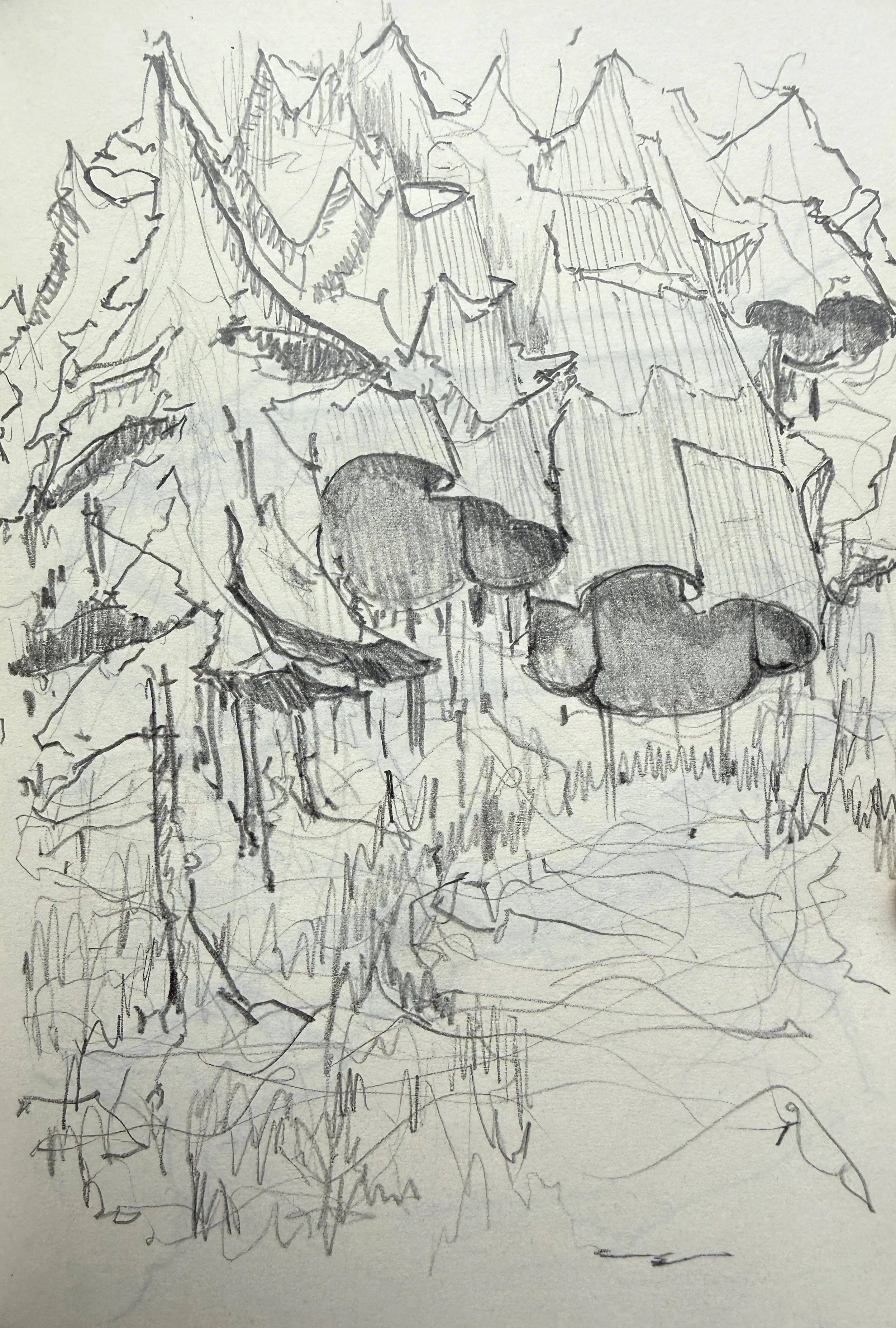
A Forest Clearing
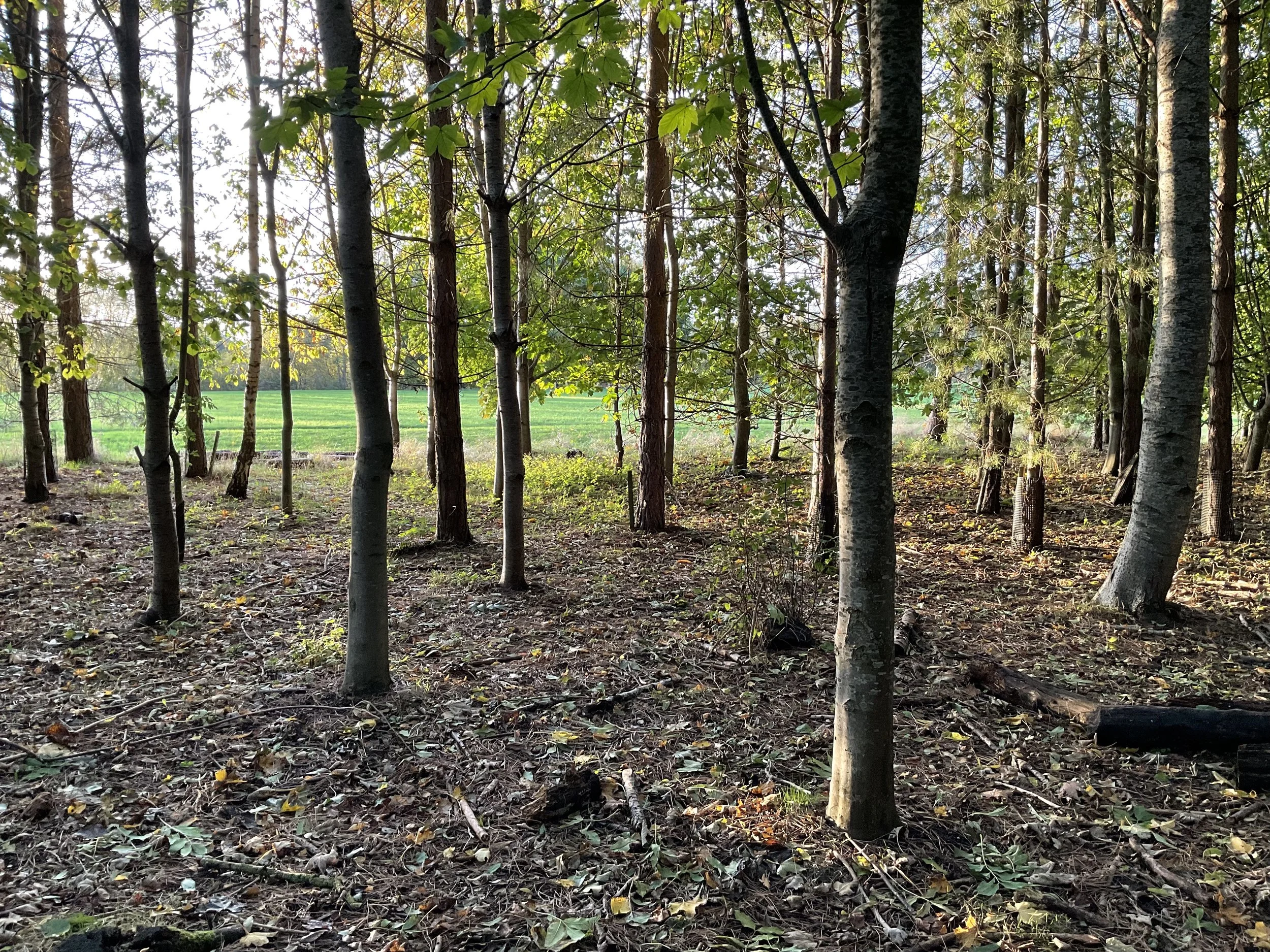
I like to think of clearings as the forest suspended - a pause in a sentence. A pocket of air: from the cool denseness of the forest into the warmth of a sun-filled grassy field or meadow.
Within the denseness of a forest you often find open patches of space, varying in size and shape. These are known as clearings. Like desert oases they are moments of sudden contrast ... where one is a sigh of relief from parched sand and the other from the thicket of trees. What is dry is suddenly wet and what is dark, cluttered and dense is suddenly light, open and revealing. The temperature and smells, too, suddenly change. You pause to drink in expanse and light, while eyeing the surrounding border, taking you back to darkness. I like to think of clearings as the forest suspended - a pause in a sentence. A pocket of air. The sensation is inspiring to walk from the cool denseness of the forest into the warmth of a sunfilled grassy field or meadow. Heightened experience through contrast. Surrounded by a wall of trees, you are in a grand room.
At times the trees close their ranks fully encircling, and at others one end is open, perhaps leading you onto another. The ground is not always flat but follow the slope of a mountainside or even harbour it’s own little hill. The making of these ‘free-spaces’ are often due to human clearing for grazing and deforestation. They also arise naturally through a great storm or other event that may have killed the trees. These clearings are not static. Left alone, they will fill again, changing through a dynamic, ongoing cycle of regeneration, and succession. While not seen, the moist aromas reveal the simultaneous natural processes taking place at a multitude of scales - life and death coexisting in the fabric of material around you.
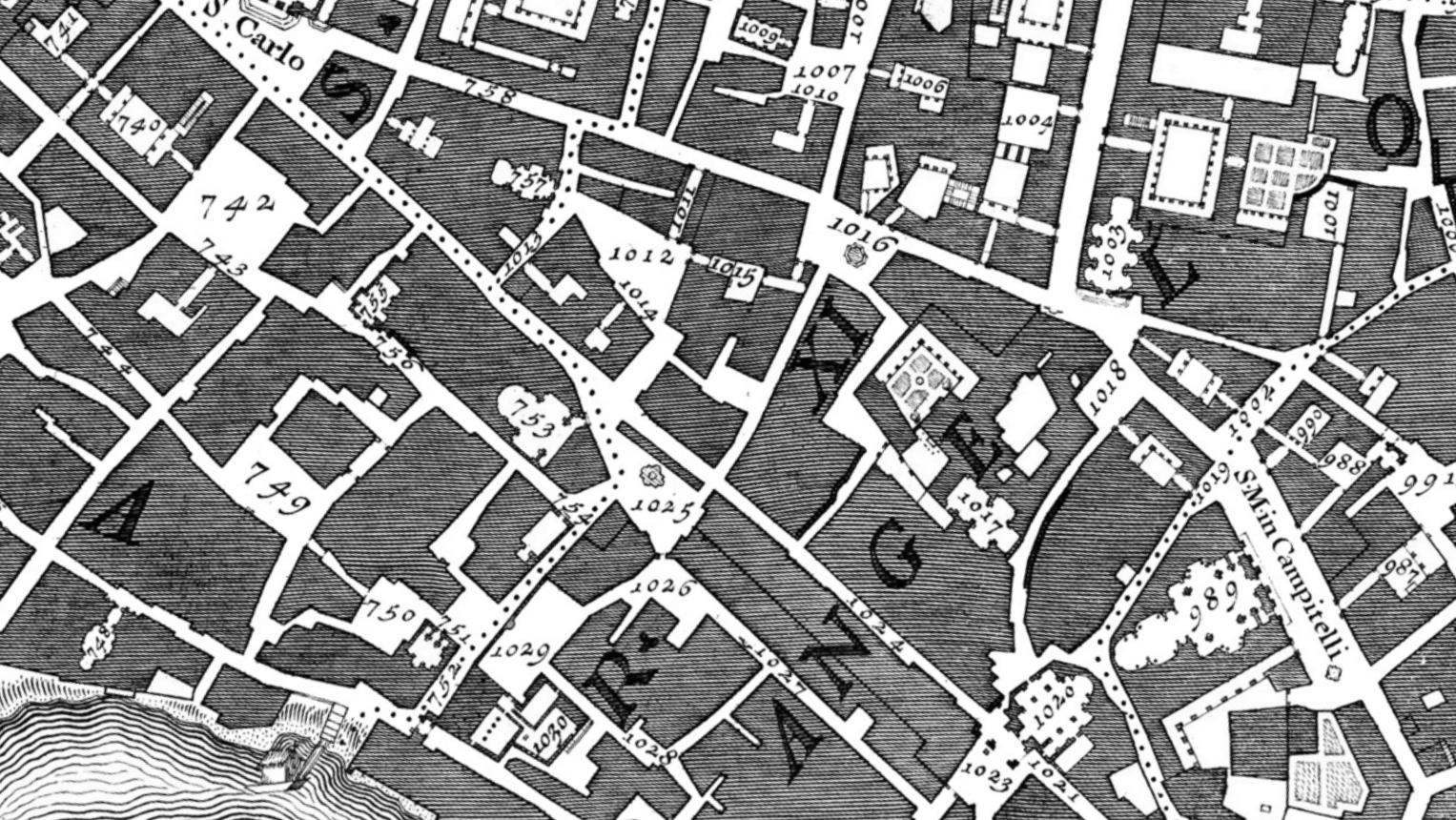
As an architect, I like to envision these as constructed spaces shaped by the mass of surrounding walls, rooms or buildings. Thinking laterally is a way of inventing or bringing attributes of one experience into another - visualising the forest as the walls or closed rooms of a house that shape your living room or kitchen - clearings. Similarly, it is to experience the mass of buildings in a city as the making of clearings - the open urban spaces between. At this scale, there is a map where we learned about the concept of ‘figure-ground’ in architecture school - the famous Nolli plan of Rome (1748). I’ve spent hours wandering through this abstracted network of streets, courtyards and squares - a pattern of experiences opening and closing, compressing and releasing. Black ink embodies the dense complexity of built structures we inhabit - the homes, institutions, commercial spaces. This for me is the rich density of the forest built up in time, where trunks rise straight or tilt, some standing, some fallen with one building off the other in a network of organic matter and their processes. Walking from a dense street into an open piazza - these are the spaces where there is no ink leaving the parchment clear. The experience is envigorating giving way to the dynamics of public life, light, air.
The forest is not simply a mass devoid of events and stories. Forests go beyond the collective working noises of organic material. Forests are a bank or a library of enchantments, of myths, fairy tales, Druids, and epic tales such as Gilgamesh. Centuries of occupation, forests were once more prevalent than they are now. Dreams are triggered as you navigate the branches and soil. Your imagination triggered by the sounds around you and the thoughts you carry with you - your days work, a family concern, an upcoming holiday - all combine and filter through your mind. Flickering light through dancing trees, one moving in the opposite direction of another - optic flow. There are the windows through the canopy’s thickness, fleeting glimpses of the sky. It is an immersive rhythm: the trees shifting as your body moves through them. The clearing is the emptying of your thinking.
I like to think of forests or woodlands as a form of double-enclosure. Where the first sense of enclosure occurs on first entering the woodland of trees. Crossing the line from civilisation you’re enveloped, drawn away from everyday life. Into blackness your eyes adjust. After some wandering you arrive at the second enclosure. This time white. Eyes recalibrating as you enter the clearing, a double-negative set in fragile pockets of openness.